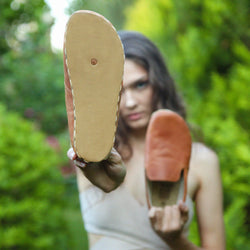
Barefoot ballet flats are minimalist flats inspired by the shape and simplicity of ballet flats, but redesigned around foot health. Instead of the rigid construction and narrow fronts found in classic ballet flats, barefoot ballet flats are shaped to let feet function naturally.
A good pair usually includes a roomy toe box, zero drop sole, and lightweight flexible sole. These features allow toes more freedom and support natural walking mechanics.
Traditional flats often look sleek because they taper inward. This polished look can come at the expense of comfort. Barefoot ballet flats try to preserve the beauty of flats while giving feet more freedom.
Some people choose barefoot Mary Jane styles over plain flats because a strap can create a more secure fit, especially for narrow feet or lower volume feet.
Wide Toe Box, Zero Drop, and Why They Matter
The wide toe box is often what draws people into barefoot shoes.
In conventional ballet flats, the big toe and smaller toes are often pushed inward. Over time that can feel tiring and may contribute to discomfort.
A wide toe box gives toes room to spread naturally.
Benefits often include:
- Better toe space
- Less crowding at the front
- More natural balance
- Greater comfort for wide feet or extra wide feet
Zero drop matters too.
Most traditional shoes have some drop, meaning the heel sits higher than the forefoot. Zero drop shoes remove that raised heel, supporting proper posture and a more natural center of gravity.
For many people, this combination of wide toe box and zero drop is what makes barefoot flats feel so different.
Barefoot Ballet Flats vs Classic Ballet Flats
Classic ballet flats can be beautiful, but they often prioritize silhouette over natural shape.
Many have:
- Narrow toe box
- Stiff sole
- Raised heel or hidden drop sole
- Limited toe freedom
Barefoot ballet flats reverse those priorities.
They typically favor:
- Natural foot shape
- Flexible sole
- Non elevated zero drop construction
- Toe room
- Walking comfort
That does not mean every barefoot model looks overly casual.
Some modern barefoot models look remarkably refined. Styles inspired by mary jane silhouettes, rose gold finishes, or polished natural leather uppers can pair beautifully with dresses, denim, or workwear.
How to Choose the Right Fit
Fit matters a lot in barefoot flats.
People sometimes size barefoot ballet flats too tightly because they are used to classic ballet flats fitting close. Butarefoot shoes should usually allow a little front space.
Toes should not hit the front.
Things to consider:
- Use the size chart, do not guess
- Check width options if available
- Consider foot volumes, low volume feet and higher volume feet may fit differently
- Half sizes can matter a lot
For narrow feet, styles with elastic openings or mary jane straps often help create a secure fit.
For wide feet, look carefully at toe box shape, not just labeled width.
A first pair may take experimentation. Many people find a second pair ends up even better once they understand their fit preferences.
Mary Jane Styles and Secure Fit Options
Barefoot mary jane styles have become popular for good reason.
The added strap can help keep flats from slipping during walking, especially for narrow heels or narrow feet.
Some people who struggle when shoes slip in standard ballet flats prefer barefoot mary or barefoot mary jane options for daily wear.
Popular features include:
- Single strap mary jane
- Double strap styles
- Soft leather strap closures
- Adjustable fits for different foot volumes
Primal Merry Jane styles often come up in discussions for people wanting a secure fit with minimalist principles.
For many people, mary jane silhouettes solve the tension between elegant style and practical walking comfort.
Best Materials, Leather, Flexibility and Comfort
Material changes everything.
Natural leather remains a favorite because it tends to soften over time and adapt to feet.
People often look for:
- Natural leather uppers
- Soft lining materials
- Flexible sole construction
- Thin sole designs with sensory feedback
Some brands also use sustainable materials, which matters to people who care about thoughtful construction.
Comfort is rarely about cushioning alone.
In barefoot shoes, comfort often comes from shape, flexibility, and allowing feet to move.
That can feel very different from heavily structured flats with rigid arch support.
Styling Barefoot Flats With Everyday Outfits
One reason barefoot ballet flats have grown in popularity is versatility.
They can work with everyday outfits without looking overly minimalist.
They pair well with:
- Jeans and simple knits
- Tailored trousers
- Dresses and skirts
- Casual workwear
Some people love classic black leather pairs.
Others choose more colors, including soft metallics like rose gold, for a slightly dressier style.
A polished look does not have to mean sacrificing comfort.
That is part of the appeal.
Popular Barefoot Ballet Flat Brands and Models
There are now more barefoot models than many people realize.
Shapen barefoot flats are often mentioned for elegant shapes suitable beyond casual use.
Peerko Petite is often discussed by people with lower volume feet.
Jenon Leather Villet styles have drawn attention for soft leather construction.
Some people explore models such as Asana Yin for a lightweight feel.
Groundies, Softstar, Be Lenka and Vivobarefoot also appear often in Anya’s Reviews roundups.
Different models suit different feet.
Some work well for regular width.
Some offer wide version options.
Some fit higher volume feet better.
That is why reviews help, but matching shape to your own feet matters even more.
Are Barefoot Ballet Flats Good for Walking?
People often ask whether flats can really work for walking.
Traditional ballet flats often perform poorly here.
Thin fashion flats may fold oddly, rub the heel, or create fatigue.
Barefoot ballet flats can feel different because the sole bends with the foot.
Many people enjoy them for:
- City walking
- Daily errands
- Office wear
- Travel when packing light
They may not replace dedicated activity footwear, but for everyday walking they can be surprisingly capable.
Foot Health Benefits of Barefoot Flats
Many people first come for style, then stay for comfort.
Barefoot flats may support:
- Toes spread naturally
- Better balance
- More natural posture
- Reduced forefoot crowding
Some people feel conventional flats weaken comfort over time because the foot adapts to cramped conditions.
Barefoot shoes aim to let the natural foot work more freely.
That is a different philosophy entirely.
Common Mistakes When Buying Barefoot Flats
A few mistakes come up often.
Buying too small is one.
Choosing based only on appearance is another.
Things to avoid:
- Ignoring toe box shape
- Assuming all barefoot flats fit alike
- Choosing tight fits expecting stretch to solve everything
- Overlooking foot volume differences
A good fit should feel secure, but not restrictive.
Are Barefoot Flats Stylish Enough for Formal Wear?
This question comes up often, especially from people used to classic ballet flats.
Yes, many are.
Some barefoot ballet flats are minimal enough for everyday outfits.
Others are designed specifically for more polished settings.
Styles like mary jane silhouettes or dressier leather flats can work beautifully for:
- Weddings
- Events
- Office wear
- Dinner out
This is where barefoot flats have evolved a lot.
They are no longer purely niche functional shoes.





 Shoes
Shoes
 Boots
Boots
 Sandals & Clogs
 Shoes
Shoes
 Boots
Boots
 Sandals & Clogs