Grounding sheets have become a notable wellness trend over the past few years, attracting everyone from biohackers to people simply looking for better sleep. But separating practical value from marketing noise takes a closer look at how these products actually function, what research supports them, and whether they belong in your bedroom. This guide covers all of it.
What Are Grounding Sheets?
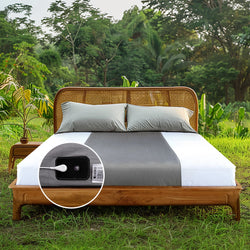
Grounding sheets are bed sheets woven with conductive materials like silver, carbon, or stainless-steel fibers that connect you to the earth's natural electric charge while you sleep.
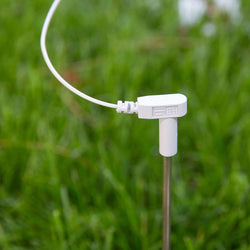
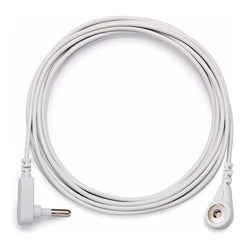
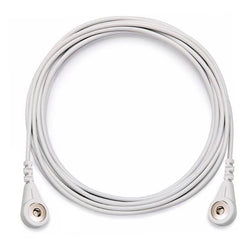
They plug into a wall outlet's grounding port or connect to a grounding rod driven into the soil outdoors via a snap-on cord.
Grounding bed sheets are one category within a broader family of grounding products that includes grounding mats, conductive pillowcases, throws, and grounding socks.
The main intended outcomes are straightforward: supporters claim they can improve sleep, promote relaxation, and potentially reduce inflammation and stress. Here's the quick summary:
-
Grounding sheets are woven with conductive materials like silver fibers or stainless-steel threads
-
They connect to the earth's electrical current through your home's ground port or an outdoor grounding stake
-
They're designed to let you experience grounding passively, overnight, for 6–8 hours
-
They sit alongside other grounding products like mats and pillowcases
-
Reported benefits include better sleep, less pain, and reduced muscle soreness
-
They are not classified as medical devices
Grounding vs. Earthing: What Do These Terms Really Mean?
In wellness contexts, "grounding" and "earthing" both refer to connecting the human body to the earth's natural electric charge - essentially sharing the planet's electrical potential. In North America, "grounding" is the dominant term, while "earthing" appears frequently in scientific papers, product descriptions, and in journals focused on alternative and complementary medicine.
Don't confuse this with psychological grounding techniques used in anxiety therapy, which are about staying mentally present - not about electrical contact.
The engineering concept behind all of this is familiar: every properly wired electrical outlet has a grounding port that connects to the earth for safety. Some proponents describe this body-to-earth connection as a form of electronic nutrition, where the body absorbs negative electrons from the ground. Modern grounding products borrow that same electrical path to connect you to the earth's surface while you're indoors.
-
"Grounding" and "earthing" are interchangeable in product and wellness use
-
Psychological grounding is unrelated to electrical grounding
-
The outlet's ground port inspired the design of modern earthing sheets
-
Grounding connects the body to the Earth's electric charge
How Do Grounding Sheets Work?
Understanding how grounding sheets work starts with their construction. A grounding sheet is made from a base fabric - typically cotton or an organic blend - interwoven with conductive silver fibers, carbon threads, or metal fibers like stainless steel. These conductive threads form a grid across the sheet's surface.
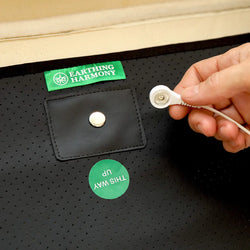
A snap connector on the sheet's edge attaches to a cord, which plugs into the ground port of a properly wired wall outlet or connects to a dedicated outdoor grounding stake. When the outlet's ground is correctly wired, the sheet connects only to the ground wire - not to live electricity - making the setup non-electrified.
Here's the core idea: the earth carries a slight negative charge, and its surface has a limitless supply of free electrons. The conductive grid in the sheet allows these earth's surface electrons to flow through the fabric. When your skin makes direct contact, your body can share that electrical potential.
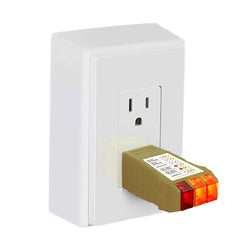
Some researchers have proposed that these negative electrons may act as natural antioxidants, potentially helping to neutralize free radicals in the human body. Many quality grounding products ship with an outlet tester so you can confirm the grounding port is functional before your first use.
-
Cotton or organic fabric forms the base; silver fibers or carbon threads provide conductivity
-
A cord connects the sheet to the ground port - never to live or neutral wires
-
The earth carries a supply of free electrons that the sheet channels to your body
-
Some grounding sheets use grounding stakes for outdoor use where outlets aren't reliable
-
The electrical current involved is the earth's own passive charge, not household electricity
Grounding Sheets vs. Grounding Mats
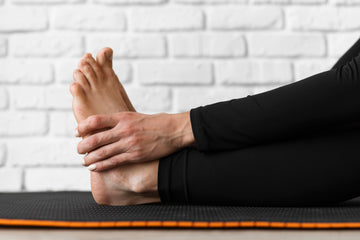
A grounding mat is a flat conductive pad - usually made from conductive rubber or polyurethane - placed under your feet at a desk, beneath your hands while working, or on the floor during gentle exercise. It provides grounding during waking hours through direct contact with exposed skin.
Grounding sheets, by contrast, function as regular bed sheets designed for overnight use. They feel closer to normal bedding, which matters for sleep comfort over 6–8 hours.
Some people combine a grounding mat during the day and a grounding sheet at night to maximize total contact time, though studies isolating the effect of contact duration are still limited.
-
Mats: daytime use, smaller surface area, durable rubber or PU materials
-
Sheets: overnight use, larger contact area (torso, legs), softer fabric feel
-
Combining both may increase total grounding hours per day
-
Sheets integrate into your existing sleep routine without extra effort
How to Use a Grounding Sheet Safely
Setting up a grounding sheet is simple, but a few steps ensure proper grounding:
-
Place the grounding sheet on your mattress - either as a fitted sheet or a flat sheet layered on top of your regular bedding
-
Attach the snap stud on the sheet to the included grounding cord
-
Plug the cord's other end into the ground port of a three-prong wall outlet (the round or bottom hole in most North American outlets) or connect it to a wall socket adapter designed for grounding
Before first use, test your electrical outlet with an outlet checker, especially in older homes built before the 1960s. Miswired or ungrounded outlets are more common than you'd expect, and without a functioning grounded outlet, the sheet won't make a conductive connection to earth.
For homes without a reliable grounding port, a dedicated outdoor grounding rod and cord can be used following local electrical codes. Some grounding sheets include an outlet tester for safety right in the box.
Direct skin contact gives the strongest effect. Thin natural-fiber pajamas may still allow some conductivity, while thick or synthetic layers can reduce it significantly.
Positioning, Daily Routine, and Care
Position the conductive area under your torso and legs for maximum contact - this is where most of your body weight creates firm connection with the fabric. Tuck or secure the sheet so it doesn't bunch during the night.
For a meaningful self-experiment, use the grounding sheet nightly for at least 30 nights before drawing conclusions. Track sleep quality, tension, and any changes in muscle recovery.
Care matters for longevity: wash in cool or warm water, avoid bleach and fabric softeners, and dry on low heat. Harsh detergents and high heat degrade silver threads and carbon fibers, reducing conductivity.
Maintenance of grounding sheets is needed to prevent oxidation of silver threads, and the effectiveness of grounding sheets may decline over time with regular use - some silver-fiber sheets lose conductivity within 6–18 months. Always follow each manufacturer's specific care instructions.
What Does the Research Say About the Benefits of Grounding?
The scientific evidence around the benefits of grounding is growing but still early-stage. Most studies are small - often fewer than 60 participants - and more high-quality trials are needed before firm conclusions can be drawn. That said, several published pilot studies offer promising signals.
Key areas of inflammation research and sleep medicine exploration include sleep quality, stress hormones (particularly cortisol), inflammation, pain, blood flow, wound healing, and immune response.
A 2004 study published in the Journal of Alternative and Complementary Medicine followed 12 participants who slept on grounded bed pads for eight weeks. Researchers found reduced nighttime cortisol levels, more normalized cortisol rhythms, and subjective improvements in sleep and pain. While the sample was small and unblinded, it remains a frequently cited reference in this biomedical journal space.
A 2022 randomized, double-blind pilot study with 22 Alzheimer's patients found that grounding patients five times per week for 12 weeks significantly improved sleep quality scores compared to sham grounding (p = 0.006). Clinical observations like these suggest real effects, though generalizability remains limited.
Some advocates describe grounding as a universal anti inflammatory remedy, but that overstates the current research evidence. Grounding sheets are not a medical device and should not replace prescribed treatments. The Sleep Foundation's overview notes that while results are promising, the placebo effect and subjective reporting bias remain valid concerns. The health implications for environmental and public health applications also remain understudied.
-
Evidence supporting grounding sheets is currently limited to small studies
-
Cortisol normalization and improved sleep are the most documented findings
-
Grounding may reduce inflammation by neutralizing free radicals
-
Results in specific populations (e.g., Alzheimer's patients) may not generalize broadly
-
More research in complementary medicine and sleep medicine is needed
-
Some researchers frame earth's electrons as potential natural antioxidants for human health
Potential Benefits People Commonly Report
People who regularly use grounding sheets commonly report falling asleep faster, fewer nighttime awakenings, and a more refreshing night's sleep. Many describe overall better sleep and a calmer nervous system at bedtime - consistent with the idea that grounding sheets are designed to shift the autonomic nervous system to a relaxed state.
Other frequently mentioned health benefits include reduced muscle soreness after exercise, less joint stiffness on waking, and reduced pain from chronic conditions. Many reports claim grounding sheets can help with chronic pain relief.
Some users say grounding sheets may enhance energy levels by improving blood circulation, and a subset of users interested in blood pressure report that addressing hypertension improves blood pressure regulation over time, though controlled data on this remains sparse.
improvements in blood flow and stress hormones round out the commonly cited list of alternative therapies benefits.
Users report that grounding sheets may reduce inflammation and improve sleep, but results vary. Some people experience quick changes within the first few nights, others notice gradual shifts over weeks, and some feel little difference. Tracking your sleep in a journal or app for 3–4 weeks provides more reliable personal data than relying on a single night's sleep.
Grounding sheets may improve sleep quality by reducing cortisol levels, but they're not a guaranteed fix - treat them as one component in a broader set of lifestyle medicine strategies.
Are Grounding Sheets Safe?
When used as directed and connected only to a properly grounded outlet or grounding rod, they are generally considered low-risk for healthy users. Grounding sheets are considered safe due to their non-electrified connection - you're linking to the earth's ground path, not to live wires carrying electrical current.
Properly certified grounding sheets include safety resistors (typically in the 100kΩ to 1MΩ range) built into the cord to limit electrical flow in the unlikely event of a wiring fault. This keeps grounding safe even in edge-case scenarios. Negative side effects from grounding sheets are undocumented in formal research.
-
Users connect only to the grounding path, not live or neutral wires
-
Quality cords include in-line resistors to limit current
-
Unplug grounding products during electrical storms or when an electrician is working on your wiring
-
Anyone with a pacemaker, implanted medical device, or on blood-thinning medication should consult a healthcare provider before use
-
Test your outlet before first use to confirm proper grounding
Possible Side Effects and Sensations
Some new users report temporary sensations during the first few nights - tingling, warmth, restlessness, vivid dreams, or mild headache. These reports are largely anecdotal and not well-studied scientifically. Many people experience no noticeable side effects at all.
If you're sensitive, ease in: start with shorter sessions of 30–60 minutes in the evening and gradually build up to overnight use. If you feel unwell or experience persistent symptoms you suspect are linked to grounding, stop use and seek medical advice. The overall risk profile is low, but listening to your body always takes priority.
Choosing Between Grounding Sheets, Mats, and Other Grounding Products
The main grounding products on the market include grounding sheets, grounding mats, grounding pillowcases, grounding socks, and conductive throws or wraps. Each serves a different use case.
Grounding bed sheets stand out for full-body direct contact over many hours while you sleep - no extra effort required once setup is complete. Grounding mats are more durable and ideal for under-desk feet or yoga use but cover a smaller contact area.
Pillowcases target the head and face. Some people start with a mat at a workstation, then add grounding sheets once they're comfortable with the concept.
-
If your primary goal is to improve sleep quality, a grounding sheet or pillowcase is the logical starting point
-
For daytime grounding at a desk, a mat makes more sense
-
Combining products increases total contact hours
-
Choose based on your lifestyle and where you want to experience grounding most
Key Buying Checklist for Grounding Bed Sheets
-
Conductive material content: Look for clear information on the percentage of silver fibers or stainless-steel threads (budget sheets: 2–10%; premium: 20–30%)
-
Base fabric: Prioritize skin-friendly, breathable materials like organic cotton for sleep comfort over 6–8 hours
-
Included accessories: Confirm that an outlet tester and grounding cord are included or easily available for your outlet style
-
Care instructions: Read them before purchasing - understanding wash requirements tells you how long the sheet will maintain conductivity
-
Warranty and support: A responsive return policy matters, especially for a product where effectiveness depends on material integrity over time
Consider exploring options from specialists like Earthing Harmony who focus specifically on grounding bedding and accessories.
Practical Tips to Get the Most From Grounding Sheets
Grounding sheets work best as part of a broader healthy sleep routine. Combine them with a regular sleep schedule, low bedroom light, reduced late-night screen use, and a cool room temperature. None of these alone will make a huge difference, but together they compound.
Create a "grounded sleep experiment": track bedtime, wake time, perceived sleep quality, mood, and soreness for 1–4 weeks before and after starting. This gives you personal data rather than guesswork.
-
Avoid heavy lotions or oils before bed - slick skin can reduce contact quality
-
Light perspiration or moderate humidity can slightly improve conductivity
-
Position the sheet so your skin has direct contact with the conductive surface
-
Treat grounding as one piece of your overall approach to human health, not a stand-alone fix
When Grounding Sheets Might Not Be Right for You
Grounding sheets aren't ideal in every situation. If your home has unverified or faulty wiring, frequent lightning storms, or you can't follow the care instructions, the benefits won't materialize - and safety concerns increase.
People who are uncomfortable with any electrical connection in bed may prefer simpler alternatives: walking barefoot on grass, soil, or sand is the original form of grounding and costs nothing. Those dealing with diagnosed health problems like sleep apnea or restless legs should seek formal diagnosis and treatment from a sleep medicine professional first.
Grounding is best viewed as complementary to professional medical care and healthy daily habits - not a replacement. If you're exploring alternative therapies for chronic conditions, always loop in your doctor.
Grounding sheets offer a low-effort, low-risk way to bring the earth's charge into your sleep routine. The research evidence is still building, but the safety profile is strong and the potential upside even if partly driven by improved sleep comfort and routine makes them worth a thoughtful trial.
Start with a tested outlet, a quality sheet, and 30 nights of tracking. That's enough to know whether grounding work makes a difference for you.





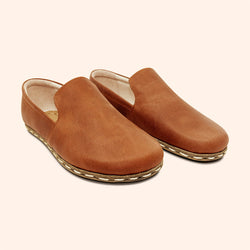 Shoes
Shoes
 Boots
Boots
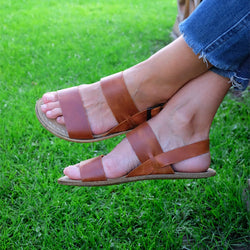
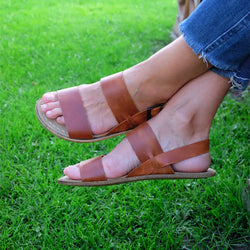 Sandals & Clogs

 Shoes
Shoes
 Boots
Boots
 Sandals & Clogs